Brand Architecture for a Multi-Product SaaS Company
A practical way to keep several SaaS products distinct while making the parent company feel coherent, credible, and easy to understand.
A multi-product SaaS company has two recognition problems at the same time. Each product needs to be findable and memorable. The company behind the products needs to feel dependable enough to support a larger decision.
If every product gets a separate logo, type system, and website pattern, the company can start to look like a collection of unrelated vendors. If every product is forced into one identical expression, buyers cannot tell which product solves their problem. Brand architecture is the set of decisions between those two failures.
Separate shared foundations from product signals
Start by listing what must remain stable:
- company name and parent relationship;
- core type ramp and grid;
- component behavior and navigation conventions;
- diagram and screenshot grammar;
- voice rules and proof standards.
Then list what a product may use to signal difference:
- product name and descriptor;
- one accent or tonal emphasis;
- information density for its audience;
- a small set of product-specific imagery or motion;
- product-level examples and workflows.
The list should be short. Every extra variable increases the number of combinations a team must maintain.
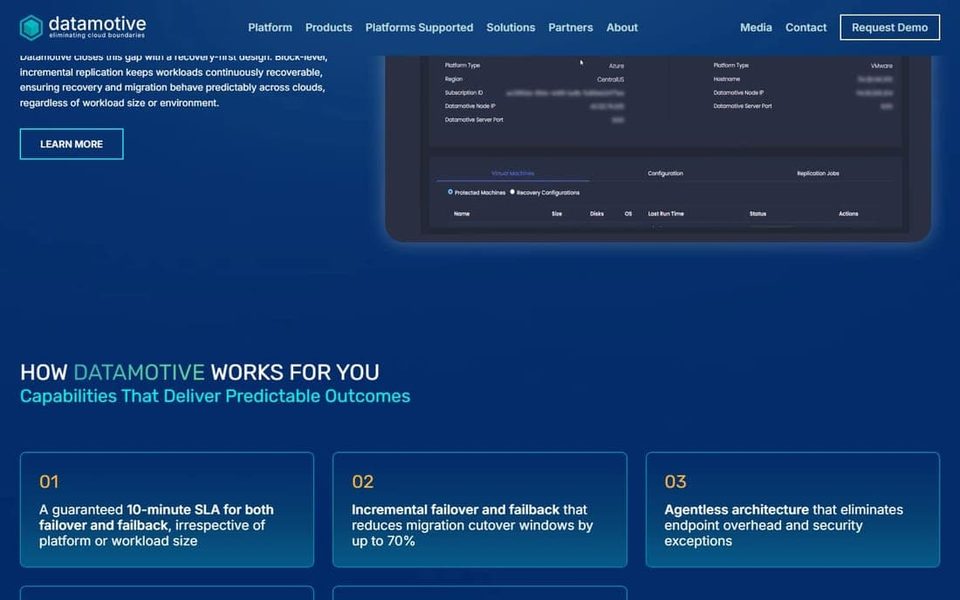
At Datamotive, three products had grown with different visual decisions. The answer was not to erase all difference. It was to establish a shared system and define the few parameters that could flex. That decision is the heart of a marketing design system for a small B2B SaaS team.
Choose the relationship a buyer should feel
Ask what the buyer needs to believe when they move from a product page to the company page. There are three useful relationships:
- The product is a named offer from one trusted company.
- The product is a specialist solution that inherits the company's credibility.
- The product is a distinct business with a visible but lighter parent relationship.
The answer influences navigation, naming, URLs, page headers, and the amount of visual difference. It is not only a logo question.
Design the transition between levels
Brand architecture is tested in transitions. A visitor may arrive on a product page from a specific search, read a case study, open the company page, and return to a demo request. Each transition should preserve enough context to answer: where am I, what does this product do, and who stands behind it?
Use repeated signals in the page system:
- a consistent parent-company mark or wordmark placement;
- a product descriptor that appears in navigation and metadata;
- one shared proof or about pattern;
- a visible path back to the product family;
- a single language model for outcomes and calls to action.
The Datamotive case study shows why these transitions matter. A system is more valuable than a collection of isolated product pages because it carries recognition between decisions.
Avoid the naming trap
Names often fail because the team asks whether they sound distinctive before asking whether they are understandable. A product name should be tested in a navigation label, a sales deck title, a search result, and a sentence spoken by a buyer.
Write the full relationship in plain language: Company offers Product for Outcome. If the sentence requires a long explanation, the product descriptor is doing useful work and should stay close to the name.
A practical architecture review
Review the system at four zoom levels:
- Family level: Can a visitor see the product set and understand the parent relationship?
- Product level: Can they identify the product's job in one screen?
- Workflow level: Can they understand how the product operates?
- Proof level: Can they inspect evidence without leaving the visual language?
If difference only appears at the family level, the products may be hard to find. If difference appears everywhere, the company may be hard to trust as one system. The right balance is not a universal ratio. It is a clear reason for each variation.
Related reading: what a B2B SaaS brand actually needs, enterprise SaaS trust signals, and information architecture for a multi-product SaaS website.